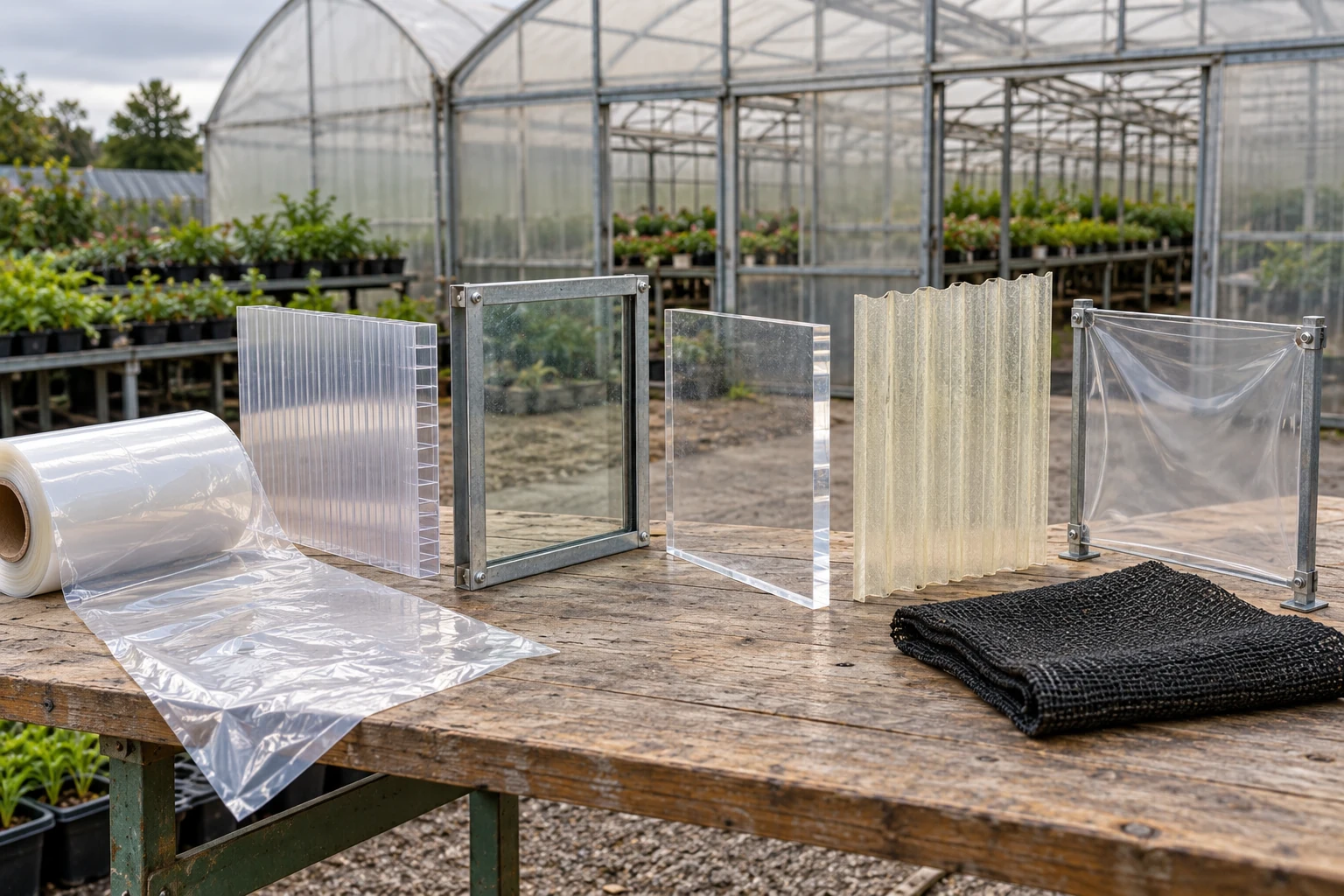
Polyethylene film suits many curved and seasonal greenhouses. Clear multiwall polycarbonate is an option for permanent frames where heat retention matters. Horticultural glass suits structures designed to carry its weight. Compare the light and heat performance of the installed roof and walls alongside ventilation, wind and snow loads. Acrylic, fibreglass-reinforced plastic and ETFE suit more specialised applications.
- Start with greenhouse-grade polyethylene if the frame is curved and the covering must be easy to replace.
- Assess layer arrangement and airtightness together when comparing insulation.
- Compare tested light performance for actual products, not generic material names.
- Coordinate roof selection with structure, weather loads and ventilation.
This guide addresses covering selection. See greenhouse structure types for frames and spans, and the greenhouse design and construction guide for project sequencing. Structure and covering are related decisions, but they are not interchangeable topics.
How do greenhouse covering types compare?
Compare defined assemblies: single film versus inflated double film, solid versus multiwall panels, and clear versus diffuse glass. Double-layer, anti-drip and diffuse describe configurations or properties rather than separate material families. The following table is an initial decision aid; final specifications require the actual product data sheet and project design.
| Covering | Main advantage | Important limitation | Check before ordering |
|---|---|---|---|
| Greenhouse polyethylene film | Lightweight and flexible on curved frames | Tearing, abrasion and periodic replacement | Greenhouse grade, additives, thickness and warranty |
| Multiwall polycarbonate | Impact resistance and insulation appropriate to panel geometry | Installation, movement and channel contamination | Panel model, UV side, U-value and edge details |
| Horticultural glass | Durability and potentially high light transmission | Weight, breakage and frame and installation requirements | Glass type, safety classification and optical properties |
| Acrylic or PMMA | Clarity and rigid multiwall options | Scratching and product-specific impact resistance | Greenhouse suitability, thickness, installation and warranty |
| Translucent FRP | Rigid or semi-rigid panels with light diffusion | Resin and protective surface quality; optical ageing | Weathering, surface finish and light data |
| ETFE film | Specialist lightweight membrane options | Supply, connection design and specialist maintenance | Complete assembly, layers and repair capability |
Which covering suits a small greenhouse?
Start with greenhouse-grade polyethylene film for a seasonal hoop frame or removable growing tunnel. For a permanent hobby greenhouse, compare clear multiwall polycarbonate and any glass system designed for the frame. Choose a system with working vents and panels or film sections you can replace individually where the design permits.
- Seasonal hoop frame: Check how the film attaches at the ends and around doors and roll-up sides. The film must fit the curve and reach the attachment points.
- Permanent greenhouse: Check the sheet layout, seals and vent operation. For winter use, estimate nighttime heat loss and compare winter light at crop level before choosing the panel.
- Lean-to or shaded site: Observe the site during the growing season. Nearby buildings and trees can limit light even with clear glazing. Check how heat escapes through vents and doors on sunny days.
For a frame exposed to strong wind, check its anchorage and how the covering is held at the corners, doors and roof edges. The suitability of a particular sheet also depends on the frame and fasteners.
Polyethylene greenhouse film
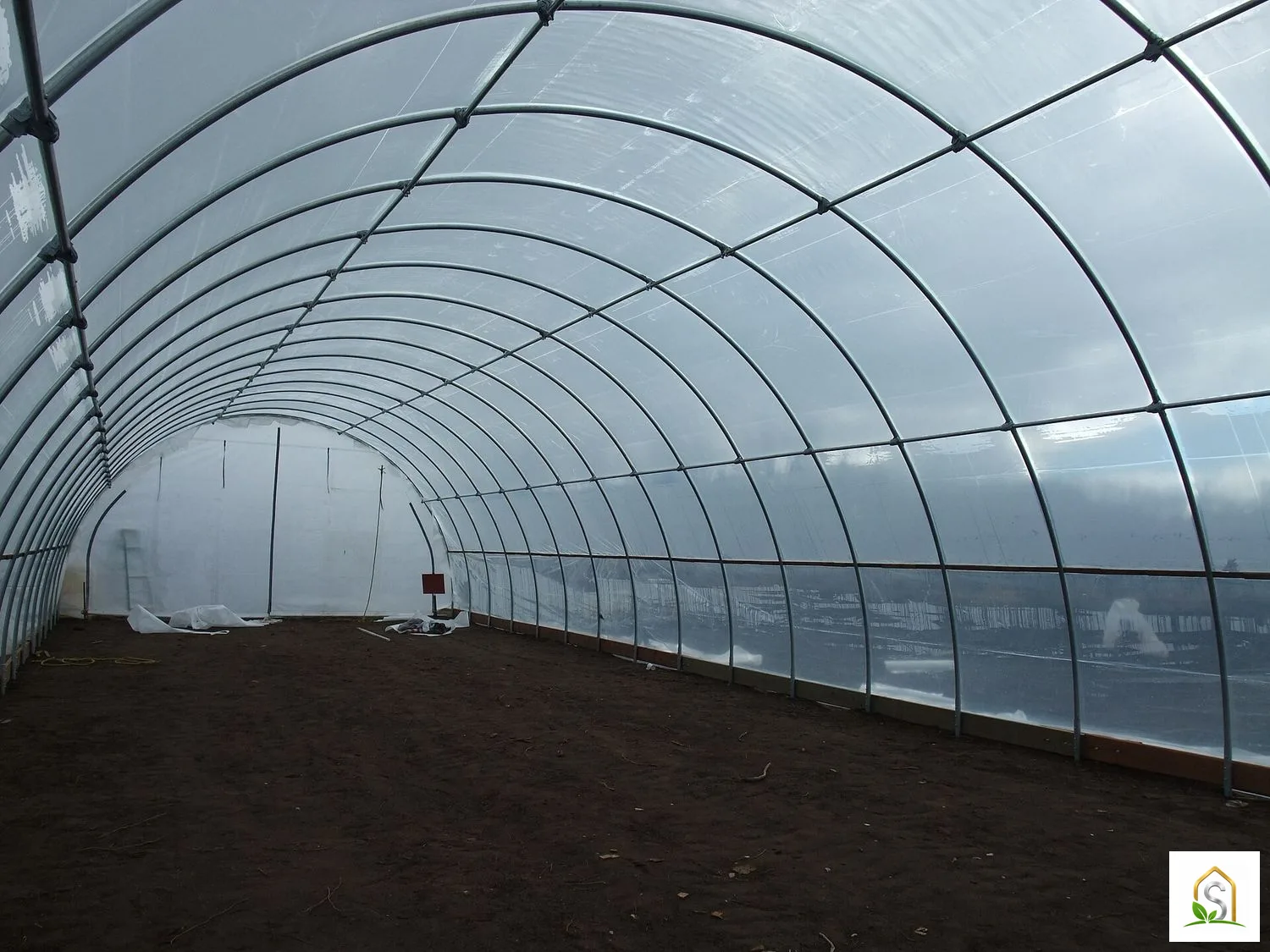
Specify greenhouse-grade polyethylene film with the dimensions, weathering resistance and condensate behaviour needed for the installation. Flexibility and low weight suit many curved frames, while sharp edges, poor attachment and abrasion can shorten service life.
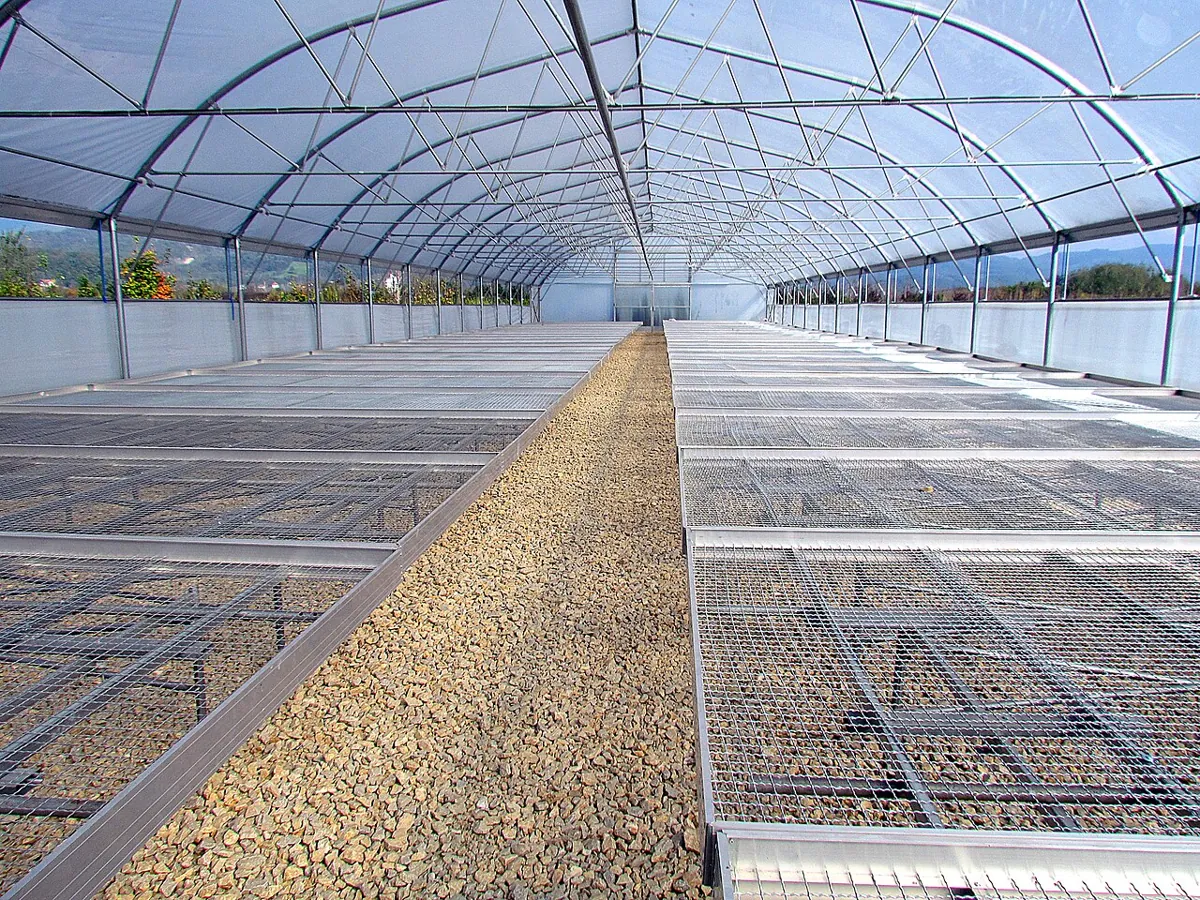
A three- or five-layer coextruded film is normally one manufactured sheet. An inflated double covering consists of two separate films with an air space. Manufacturing layer count therefore does not establish the insulation of the installed greenhouse.
UMass film guidance reports about 40% lower night heat loss for inflated double film compared with a single layer. This is not a guaranteed reduction in the entire energy bill: leakage, equipment and operation also matter. Assess film life using its warranty, solar exposure, chemical compatibility and installation conditions.
Single film, coextruded film or inflated double film?
Ask for the film width and thickness, the installation orientation of the anti-drip surface if specified, and the warranty conditions. Measure over the arch and allow for attachment and seams. In an inflated system, check how the blower maintains the air gap and how the assembly can be inspected for air leaks. Use the tunnel greenhouse guide to compare the frame and vent layouts that the film must fit.
Polycarbonate: solid and multiwall sheets are different
Air cells contribute to the thermal resistance of multiwall polycarbonate. Compare insulation alongside light transmission, thickness and channel geometry. Good material impact resistance does not make a panel unbreakable or a greenhouse storm-proof. Panels, supports and fastenings must be designed as a compatible assembly.
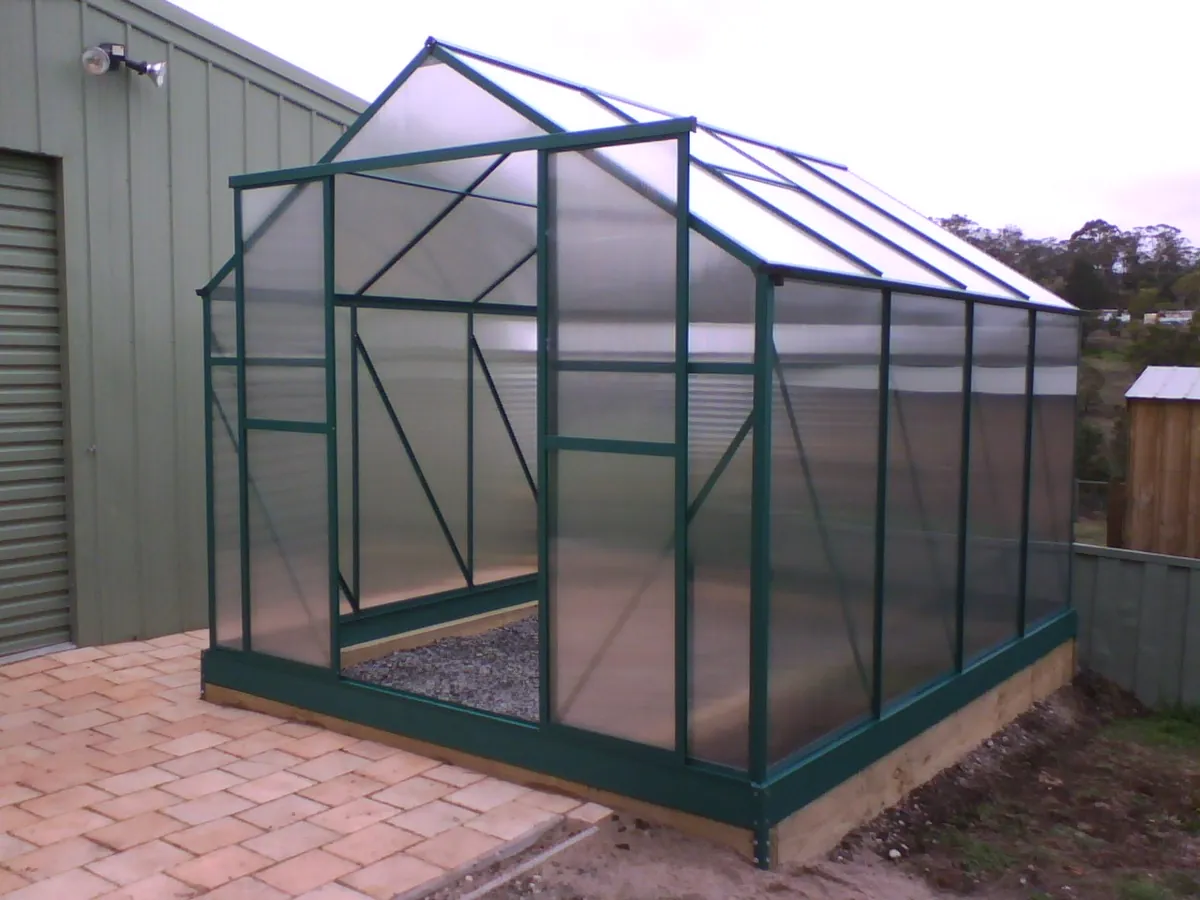
Follow the actual manufacturer's instructions for the UV-protected face, expansion allowance, support spacing and channel-end treatment. Poor edge detailing can allow moisture and contamination to accumulate. A UV label without a product model and installation specification is insufficient.
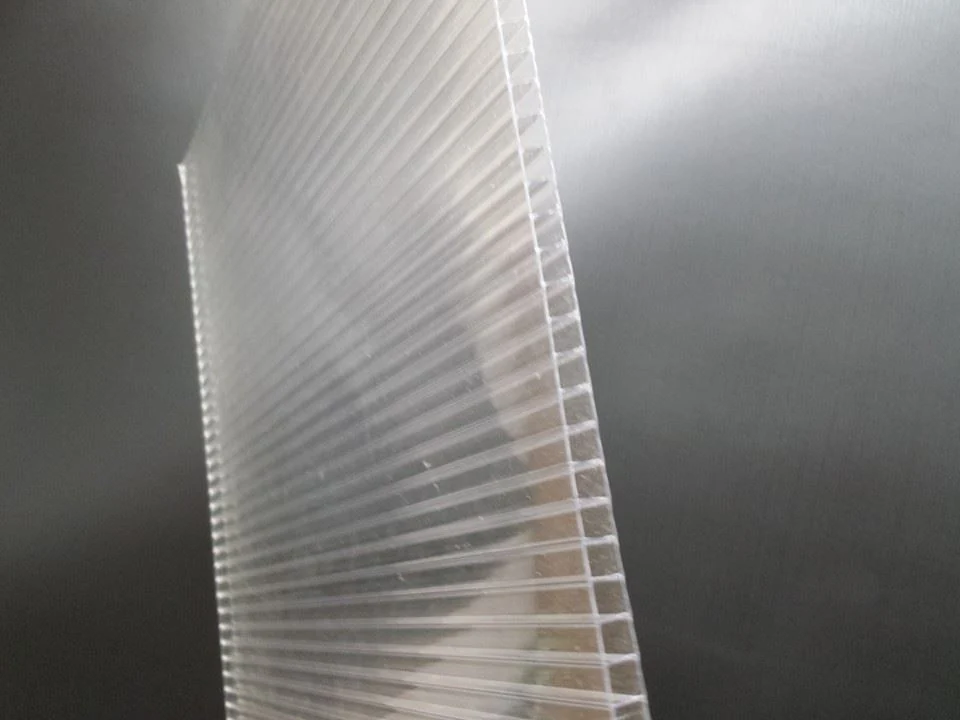
What matters when fitting multiwall panels on a roof?
Check the direction of the channels, the space for thermal movement and the profiles and tapes at the upper and lower ends. One manufacturer’s greenhouse installation guide shows ribs running down the slope to help drain moisture. Follow the instructions for the panel selected. On a curved roof, check the minimum bending radius and the permitted direction of bending. Panels of the same thickness can have different light transmission, mass and allowable support spacing.
Request a combined specification for panels, profiles, seals and installation when discussing polycarbonate greenhouse covering services. A thicker sheet is not automatically a better upgrade if crop light or connection requirements are overlooked.
Compare covering options for your greenhouse
Greenhouse glass: transmission, safety and diffusion
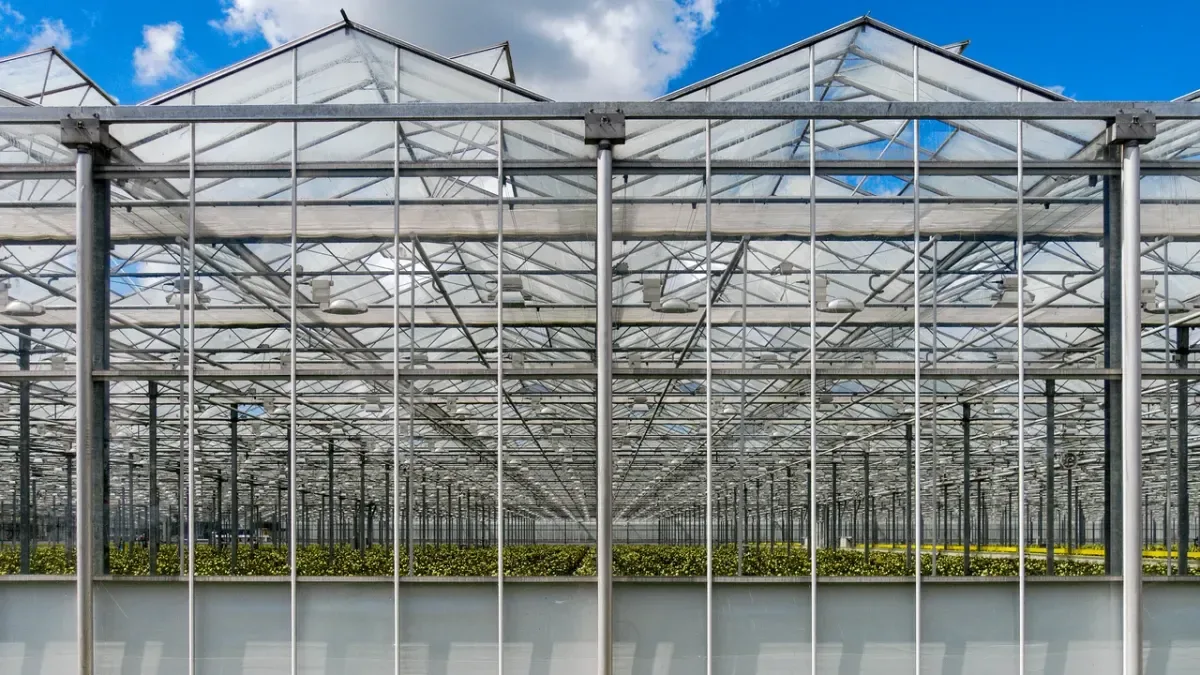
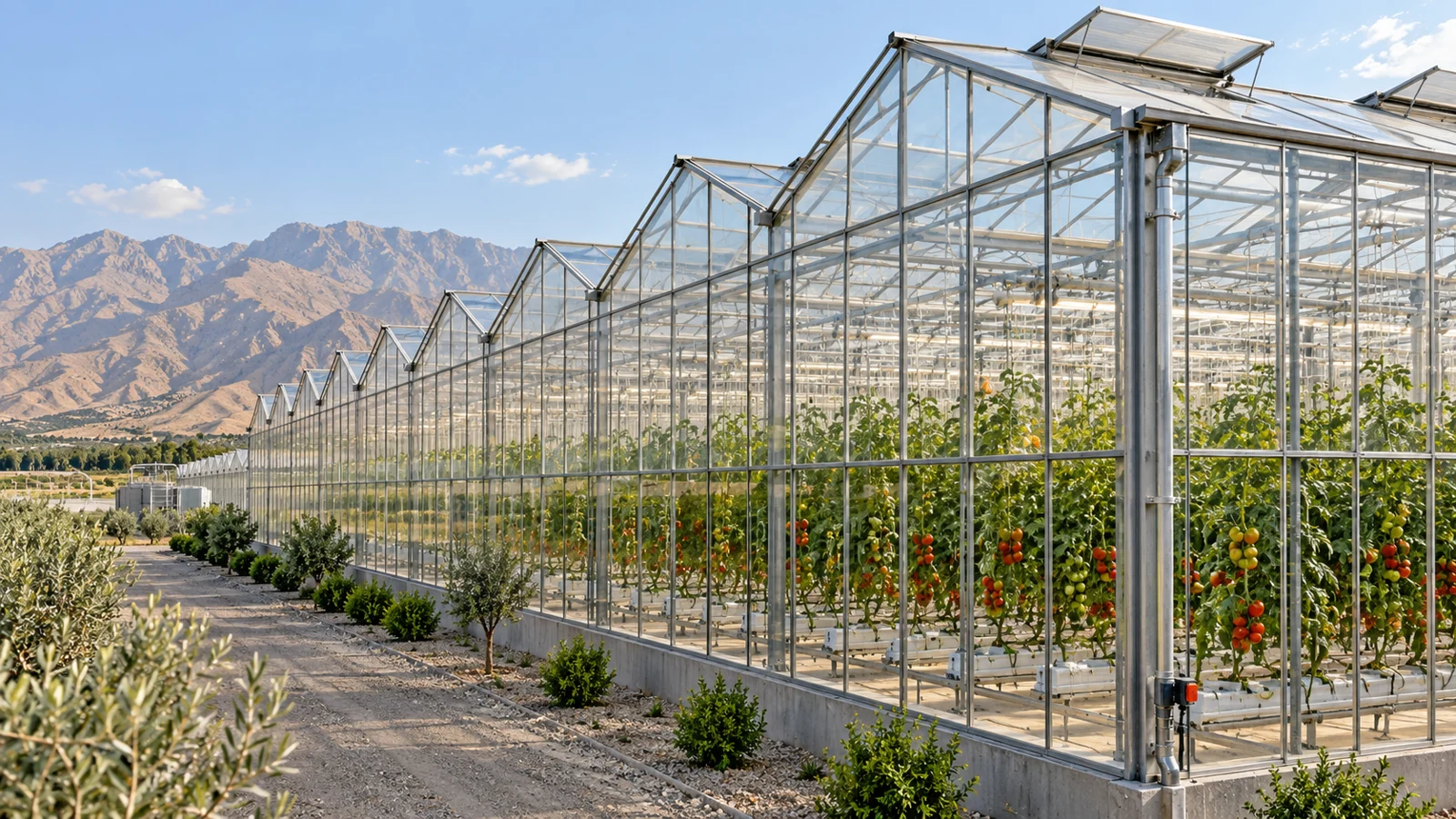
Horticultural glass can offer durability and good light transmission, but glass products differ. Low-iron content, tempering and light diffusion are separate properties. Diffuse glass is not necessarily double glazed, and double glazing is not necessarily diffuse. Specify each characteristic independently.
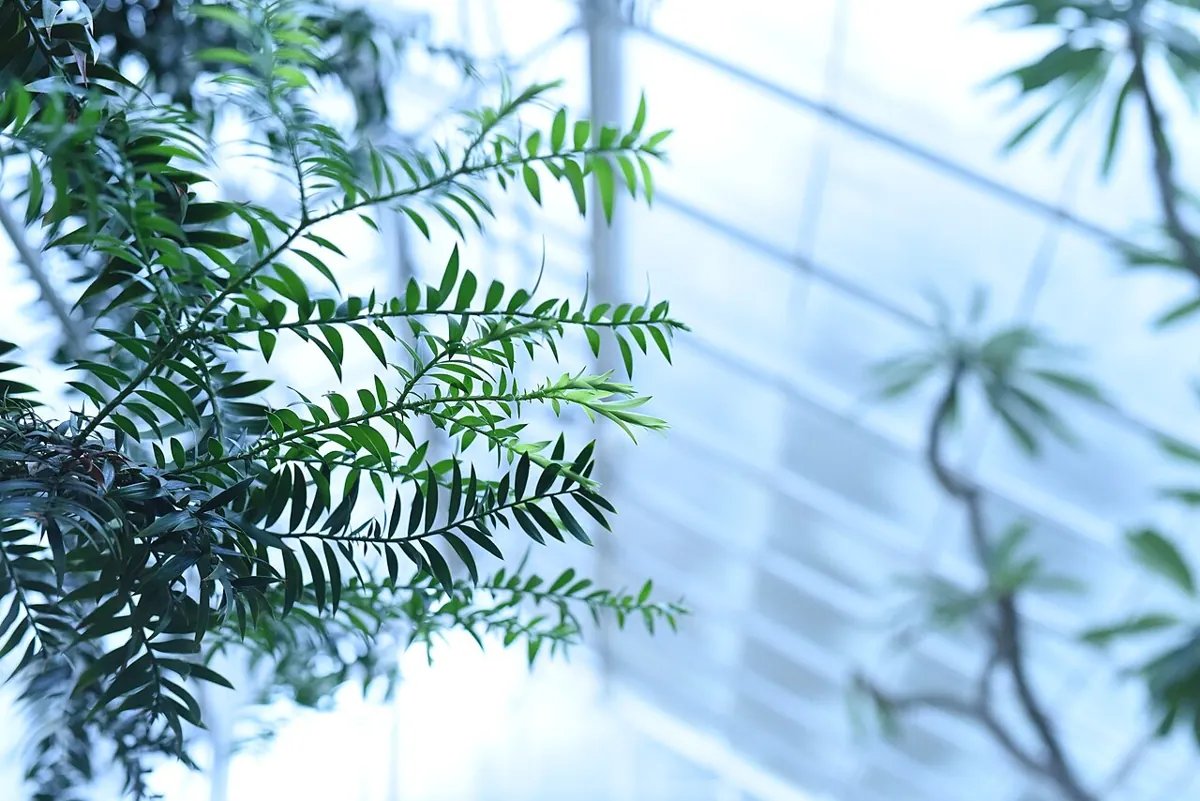
Account for covering weight, breakage behaviour, cleaning access and replacement of damaged panes. Qualified designers should determine the safety specification and installation details. Review glass greenhouse construction as a coordinated frame-and-glazing package; a good pane alone does not establish the quality of the entire house.
For glazing choices, design considerations and quotation scope, see our glass greenhouse construction guide.
Where do acrylic, FRP and ETFE fit?
Less common materials are not inherently better or worse. For acrylic, assess actual product clarity and weathering. For fibreglass-reinforced plastic, check the resin, protective surface and optical ageing. For ETFE, examine the membrane system and connections. Supply, replacement parts and specialist installation are part of the decision.
Acrylic (PMMA) is not polycarbonate. Obtain impact, scratch and installation information for the exact sheet. FRP refers to glass-fibre-reinforced polymer panels; a translucent corrugated sheet cannot reliably be identified as FRP from a photograph alone. Light performance and surface durability matter more than its appearance when new.
ETFE is a fluoropolymer used in specialist membrane or cushion systems. The photograph shows a cushion roof at the Eden botanical complex. Performance depends on the film, assembly and operating conditions.
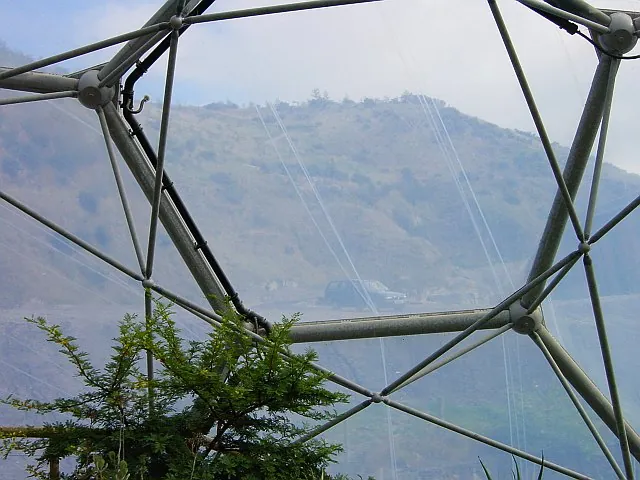
Evaluate nano-additive, smart and bio-based coverings using test evidence, durability in service, repair and end-of-life arrangements. Biodegradable does not by itself establish multi-year roof suitability or permission to discard material into the environment.
Should roof and sidewall coverings differ?
The roof must transmit useful light, manage rain and condensate, and work with weather loads and vents. Walls also need impact resistance, access and appropriate side ventilation. Mixed coverings may therefore be appropriate, but they are not a universal prescription.
| Location | Decision priorities | Common mistake |
|---|---|---|
| Roof | Light, condensate, weight, connections and vents | Overlooking vent clearance and drainage |
| Sidewalls | Seasonal light, wind, impact, seals and air exchange | Blocking necessary ventilation with rigid panels |
| North wall | Light and heat balance for the specific geometry and orientation | Permanent opaque insulation without assessing shade and crop requirements |
A film roof with polycarbonate walls, or rigid glazing with an energy screen, can be compared as design options. Assess lost light before adding opaque north-wall insulation or coloured panels. The winter greenhouse climate-control guide explains the connection with night conditions and condensation.
Choosing greenhouse glazing for local climate
Use weather and crop data for the actual site. Start with the production calendar, winter light and heat requirements, summer ventilation, and the wind and snow loads used to design the frame.
| Site conditions | Assess first | Options to compare |
|---|---|---|
| Cold and snowy | Structural loads, winter light, airtightness and heating | Inflated double film or multiwall panels, with light and structural checks |
| Hot, dry and dusty | Crop light, cleaning, ventilation and shading strategy | Clear or diffuse products selected by optical data; manageable shade |
| Humid and low-light | Seasonal light, dripping, circulation and moisture removal | Suitable light transmission and anti-condensate performance with humidity management |
| Mild winters with warm shoulder seasons | Production calendar, heat, humidity, wind and vent capacity | Greenhouse-grade film matched to the operating period and ventilation design |
Shade and insect screens do not replace weatherproof glazing in a closed greenhouse. Select shading percentage and insect mesh with regard to the crop and airflow resistance. Neither a thicker panel nor a curved frame replaces wind and snow load calculations.
Review roof and wall options for your climate
Reading covering specifications without confusion
- Light transmission: visible-light transmission and PAR transmission are not identical measurements; check the method and spectral range.
- Diffusion: compare scattering with total transmitted light. A tinted or cloudy appearance does not establish crop suitability.
- UV stability: resistance of the material to degradation is different from how much UV enters the greenhouse.
- Thermal IR: retaining long-wave radiation at night differs from rejecting near-infrared solar radiation during the day.
- Anti-drip: helps condensate move across the surface; it does not replace ventilation or disease management. Confirm treatment life.
- U-value: a lower value means less heat transmission under comparable conditions. Compare the same units, normally W/(m²·K).
Two important unit checks: a mil is not a millimetre. Six mil is approximately 0.152 mm or 152 micrometres. A U-value of 1.2 Btu/(h·ft²·°F) is approximately 6.81 W/(m²·K), not 1.2 in SI units. These are conversions, not product specifications or recommended design values.
Compare roof performance before choosing a covering
Ask for the optical and thermal data of the complete proposed assembly. The light transmission of a clean sample describes the material under test conditions. At crop level, frames, angle of sunlight, condensation and dirt can all affect the light available. In an existing greenhouse, a light meter designed for PAR can help compare representative locations at crop height under similar outdoor conditions.
Compare U-values in the same units and for the same scope. A centre-of-panel value describes a different boundary from a value for an assembly with profiles and joints. If a more insulating roof also admits less light, assess the trade-off over the crop’s actual growing season.
During handover, operate every vent and door. Check where roof runoff and interior condensate discharge, and record any areas of persistent dripping after a cool, humid night. Keep the product model, installation instructions and permitted cleaning method with the greenhouse records so that replacement parts can be specified later.
Covering procurement and handover checklist
- Record the manufacturer, exact product code, thickness, dimensions and wall count.
- Obtain optical, U-value, UV-layer and anti-condensate specifications.
- Separate covering area, waste, profiles, installation, transport and tax.
- Confirm compatibility with the frame, vents and design weather loads.
- Read warranty exclusions, chemical compatibility and installation responsibilities.
- Inspect tension or expansion provisions, seals, edges and vent operation.
- Obtain approved cleaning instructions and an inspection and repair plan.
Prepare the location, crop, production season, frame drawings and existing equipment for the final decision. Verified crop-specialist advice on light and condensation is more useful than a universal material recommendation.
Discuss the covering specification for your project
Frequently asked questions about greenhouse coverings
What is the best greenhouse covering?
The best option fits the crop’s light needs, the local climate, the frame and the maintenance plan. Film, polycarbonate and glass cannot be ranked universally without actual product specifications.
Which greenhouse roof covering is best for a cold area?
Compare multilayer assemblies and good seals alongside winter light, snow and wind loads and heating capacity. Material name alone does not establish the answer.
Is five-layer film the same as inflated double film?
No. Five-layer normally describes one coextruded film. Inflated double glazing uses two separate films with an air space.
Does anti-drip covering prevent fungal disease?
It can improve condensate movement, but disease depends on other factors too. Humidity management, leaf wetness, hygiene and specialist diagnosis remain necessary.
How long does greenhouse covering last?
It depends on product grade, warranty, radiation, chemicals, installation and maintenance. Rated life or warranty duration is not the same as actual service life.
Can roof and wall coverings use different materials?
Yes, if the structure, connections, light, seals and ventilation are designed for that combination. Check the junction between materials for movement, water drainage and airtightness.
Technical references and image information
Technical references: Virginia Cooperative Extension on glazing materials, UMass Extension on greenhouse film, and Cooperative Extension on small greenhouses. Verify manufacturer data for each actual product. Photographers, sources and image licences. Body photographs are external educational examples. .
Greenhouse coverings
Comprehensive covering selection guide
This guide compares covering families and roof and wall decisions; frame geometry is addressed in the separate structure guide.
Was this article helpful?
Comments and questions
Join the conversation without an account. Names are entered by visitors; only verified staff carry the administrator badge.
Loading…